Back to all

Case Study 2026

The Salad Combo

Modern and minimal design solutions for job referrals and application tracking.

Web DevelopmentUI&UX
The Salad Combo

Performance Snapshot

Metrics that show real momentum

6%

From 3%

Sales Growth

35%

From 20%

Customer Engagement

20%

From 10%

Conversion Rate Boost

The Brief

What the project needed to accomplish

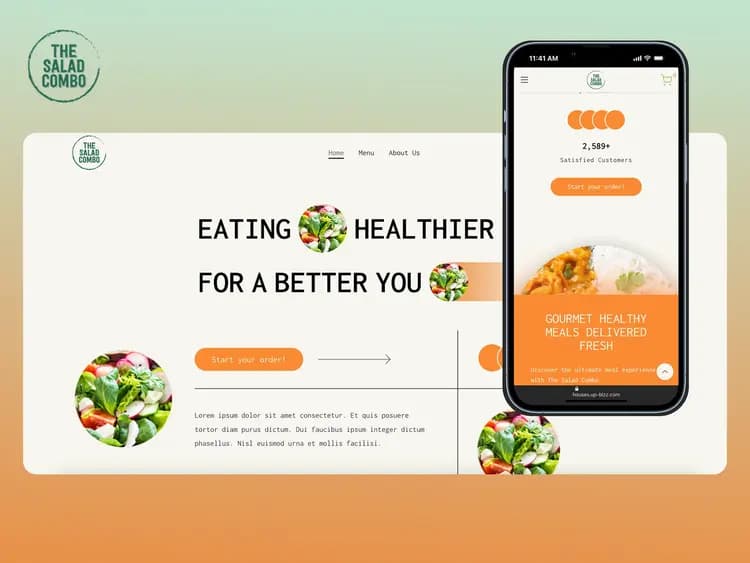
Salad Combo is a food brand offering fresh, healthy meals through an online ordering website. The existing site was built on a basic and rigid structure that did not properly support menu handling, ordering logic, or consistent behavior across devices. Both the visual layer and the underlying implementation were outdated and difficult to extend.
The Challenge

Where the complexity showed up

The objective of this project was to design and code a new website from the ground up, delivering a reliable, structured, and maintainable digital ordering platform.

The Solution

How the experience was shaped

The previous implementation functioned largely as a static website with limited interactive logic. Menu items were difficult to browse efficiently, search functionality was either missing or unreliable, and the ordering process was not clearly supported by the site structure.

The Outcome

What the work delivered next

The codebase did not scale well, mobile behavior was inconsistent, and changes were difficult to maintain. The platform required a full rebuild — including layout logic, interaction handling, and responsive behavior — rather than surface-level visual changes. We designed and fully coded a new web platform, rebuilding both the interface and the underlying structure. A new visual system was implemented alongside a clean, component-based layout, but the focus of the work was on functional implementation rather than appearance alone. The homepage was rebuilt to act as a functional entry point into the system, exposing menu access and search functionality directly. A searchable menu system was implemented, allowing users to locate items quickly through a visible search input placed in the hero section. Menu pages were coded with filterable categories, enabling dynamic browsing of dishes rather than relying on static lists. Item views were rebuilt with consistent Add to Cart actions that interact directly with the ordering system. Ordering logic was clarified and reflected directly in the site structure through a simple three-step explanation aligned with how the system actually works. Cart behavior, item selection, and navigation between steps were implemented consistently across pages. The entire platform was coded with responsive behavior in mind, ensuring layouts, interactions, and ordering functionality work reliably on both desktop and mobile devices. Supporting sections such as testimonials were implemented as secondary components that do not interfere with core functionality. The footer was rebuilt as a structured system element, providing access to contact information, blog content, and newsletter registration while remaining lightweight and easy to maintain. The result is a fully coded, structured web platform that replaces a static and fragmented setup with a functional digital ordering system. Menu browsing, searching, and ordering are now handled through clear logic implemented directly in the codebase. The website behaves consistently across devices, is easier to maintain, and provides a solid technical foundation for future updates and extensions. The project delivers a working system — not just a redesigned interface.